Travel to Switzerland, Liechtenstein, Innsbruck and Bavaria
Day 2 Zurich - Lucerne - Zurich (126 Km.)
(in 63 Km.) Lucerne: Lucerne, located in central Switzerland, has a history that dates back to the early Middle Ages. The first records of the settlement appear around the 8th century, when it developed as a small fishing and trading village on the shores of what is now known as Lake Lucerne or Vierwaldstättersee. In the 12th century, the construction of the St. Leodegar Monastery increased the area’s religious and economic importance. By the 14th century, Lucerne had become a free city and joined the Swiss Confederation in 1332, playing a key role in regional politics. During the late Middle Ages and Renaissance, Lucerne grew as a center of trade thanks to its strategic position between northern and southern Europe. Its defensive structures, including towers and walls, were built to protect against invasions. Today, Lucerne retains many elements of its medieval past while serving as a cultural and transportation hub, connecting railways, lake ferries, and mountain routes.
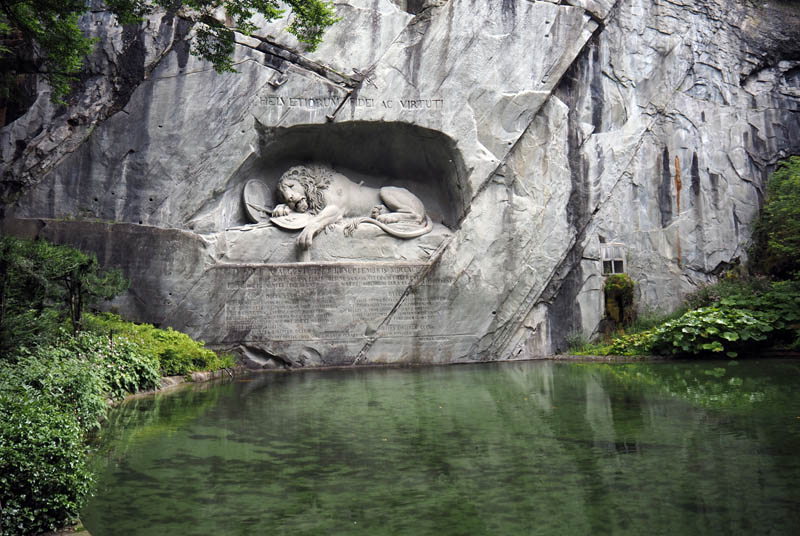
Lucerne - Lowendenkmal
We began our visit at the Löwendenkmal, also known as the Lion Monument. This monument commemorates the Swiss Guards who were killed during the French Revolution while defending the Tuileries Palace in Paris in 1792. The sculpture, carved directly into a sandstone cliff, depicts a dying lion and was completed in 1821 by the Danish sculptor Bertel Thorvaldsen. The surrounding park provides space to view the monument and read information about its historical context. After observing the site and its details, we continued walking toward our next destination, passing through streets lined with traditional Swiss buildings. Along the way, we noted several commemorative plaques and smaller statues related to Lucerne’s civic and religious history.
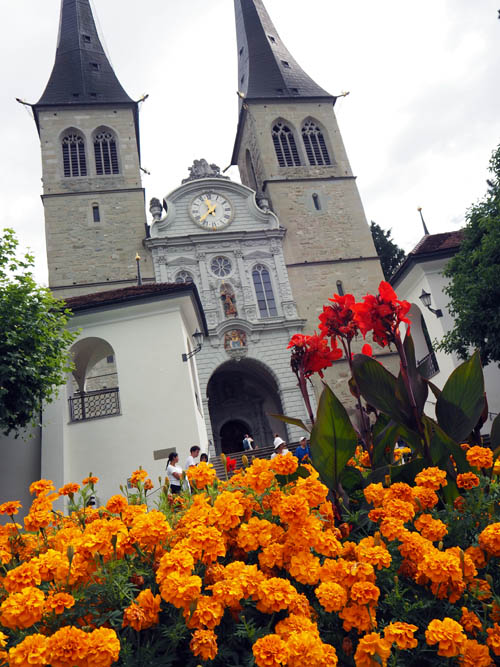
Lucerne - Church of St. Leodegar
Our next stop was the Hofkirche, or Church of St. Leodegar, which stands on the site of a former Benedictine monastery. The current structure was built in the 17th century in a late Renaissance style, following a fire that destroyed the earlier Romanesque church. The two tall towers of the Hofkirche are among the most recognizable landmarks in Lucerne. Inside, the church houses elaborate altars, wooden choir stalls, and numerous religious relics. Its historical role as a center of Catholic worship made it an important institution during the Counter-Reformation period. From here, we proceeded downhill toward the lakeshore, following streets that gradually opened up to views of the surrounding mountains and water.
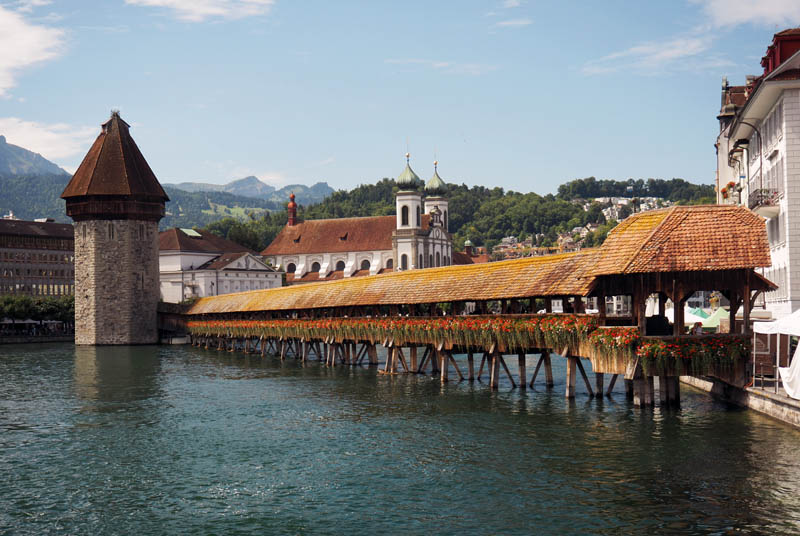
Lucerne - Kapellbrücke
We then arrived at the edge of the Lake Lucerne waterfront. Known locally as Vierwaldstättersee, this lake has been central to Lucerne’s trade and transportation for centuries. Historically, boats carried goods and passengers between towns along its shores, and today, a network of ferries continues to operate, connecting Lucerne with other settlements. From the lakeside, it is possible to see the mountainous backdrop, which includes peaks such as Pilatus and Rigi. The promenade is lined with docks, historical buildings, and sculptures commemorating events from the city’s past. After walking along the waterfront and observing the activity at the piers, we headed toward one of Lucerne’s most famous structures: the Kapellbrücke, or Chapel Bridge.
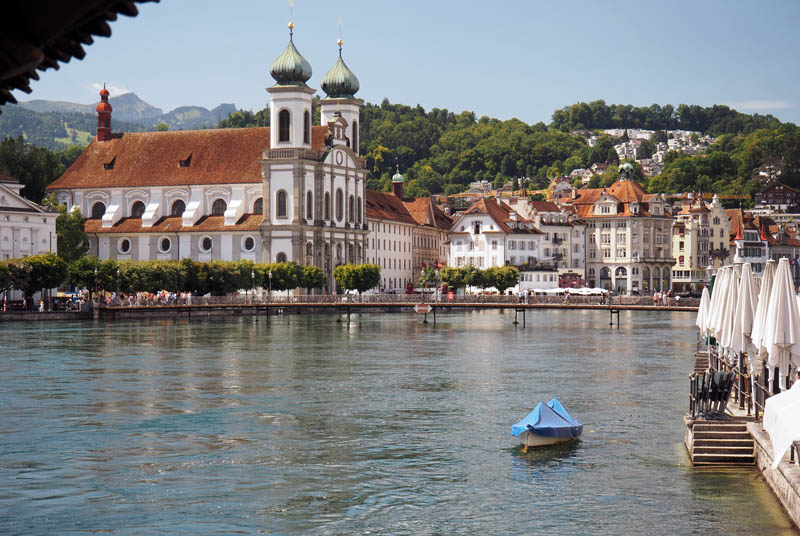
Lucerne - Jesuitenkirche
The Kapellbrücke is a covered wooden footbridge that spans the Reuss River. It was originally built in the 14th century as part of the city’s fortifications and is one of the oldest surviving wooden bridges in Europe. Along its interior, there are a series of triangular paintings dating from the 17th century, depicting scenes from Lucerne’s history. Midway across the bridge stands the Wasserturm, or Water Tower, which served various purposes over the centuries, including as a prison and archive. From the bridge, we continued along the river to visit the Jesuitenkirche, or Jesuit Church, built in the 17th century as part of the Catholic Counter-Reformation. The church’s interior is decorated with stucco work and baroque altars. After our visit, we crossed to the opposite side of the river via the Spreuerbrücke, another covered wooden bridge, slightly smaller than the Kapellbrücke but also featuring historical paintings, many of which depict the theme of the Dance of Death.
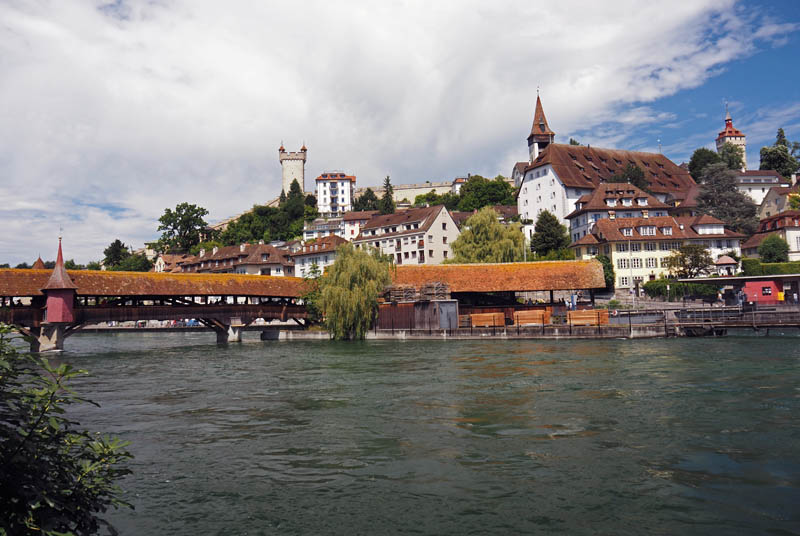
Lucerne - Spreuerbrücke
Following the riverbank, we reached the western entrance to Lucerne’s Musegg Wall, the medieval defensive wall that still encircles part of the old city. The wall was constructed in the 14th century and includes nine towers, some of which are accessible to visitors. We entered near the Männli Tower and gradually climbed a path that led to the top of the wall. From this elevated walkway, we were able to follow the structure between several towers. As we moved along, we stopped at different points to observe the preserved gates and defensive features. Eventually, we descended via a staircase at the Schirmerturm, returning to street level near the edge of the old town.
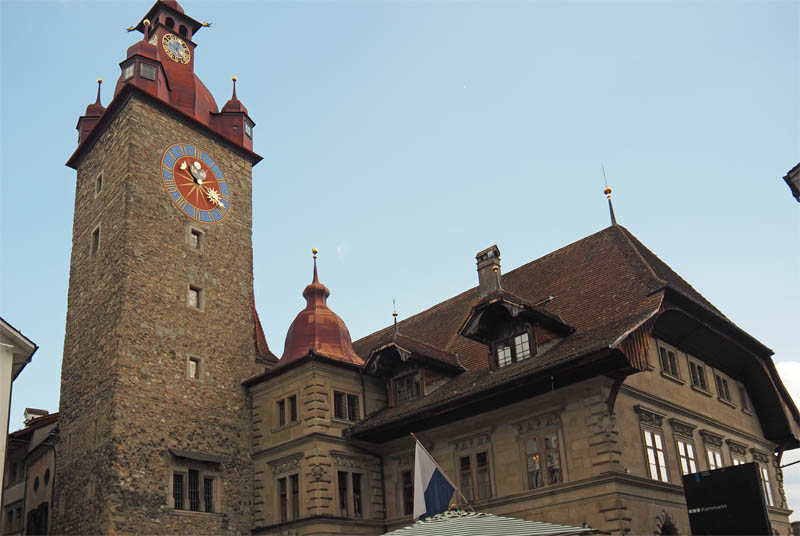
Lucerne - Rathaus (city hall)
Once back in the city center, we began our exploration of Lucerne’s Altstadt, or old town. This area retains many medieval streets and squares, reflecting the city’s historical layout. We walked to the Rathaus, or City Hall, which features Renaissance architecture and a riverside arcade. From there, we continued through Kornmarktgasse, a narrow street lined with historical buildings, before reaching the Weinmarkt, or Wine Market Square. This square was historically a site for wine trade and is surrounded by houses with painted facades. We also visited the Kornmarkt, or Grain Market Square, which served as an important center for grain exchange during Lucerne’s commercial peak in the Middle Ages. Many of these buildings now house shops, restaurants, and administrative offices, but their original structures and external decorations remain intact.
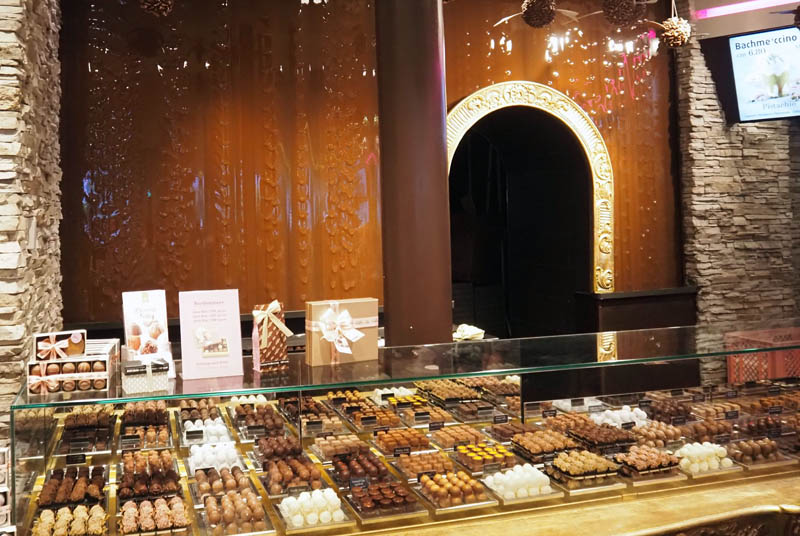
Lucerne - Bachmann Chocolatier
As we concluded our walking route, we headed toward Bachmann Chocolatier, one of Lucerne’s well-known confectionery shops. This final stop provided an opportunity to observe a modern aspect of Swiss culture tied to the country’s culinary traditions. The shop offers a variety of chocolate products, many prepared on-site using traditional techniques.
(in 63 Km.) Zurich: After completing our visit, we returned to our accommodation near the airport.